Post-Traumatic Stress Disorder (PTSD) is often understood as a condition of intrusive thoughts and painful memories. However, at its core, trauma is a physical experience. PTSD is a persistent physiological injury—a state where the body’s central nervous system remains trapped in survival mode long after a traumatic event has ended.
According to the National Council for Behavioral Health, roughly 70% of U.S. adults have experienced at least one traumatic event in their lifetime. For many, this trauma manifests as chronic nervous system dysregulation, leaving them locked in a perpetual loop of anxiety, panic, hypervigilance, or emotional numbness. When trauma lives somatically in the physical body, traditional talk therapies alone can sometimes hit an intellectual wall.
This is where equine-assisted therapy opens a new door to healing. A 2024 systematic review and meta-analysis showed that equine-assisted services produce significant clinical improvements in PTSD, demonstrating a reduction in PTSD severity scores.
At California Care Recovery in Orange County, California, our clinically supervised, ground-based equine therapy program helps individuals with PTSD retrain their nervous system, process trauma somatically, and restore lasting emotional balance.
Understanding PTSD and Nervous System Dysregulation

What is a dysregulated nervous system in PTSD?
A dysregulated nervous system occurs when chronic stress or trauma impairs the body’s autonomic nervous system, preventing it from returning to a state of calm balance. Instead of shifting smoothly between action and rest, the nervous system gets stuck in extreme operational states.
The autonomic nervous system is split into two primary divisions:
- The Sympathetic Nervous System: Responsible for the “fight-or-flight” response, driving up heart rate, muscle tension, and vigilance in response to perceived threats.
- The Parasympathetic Nervous System: Responsible for the “rest-and-digest” response, slowing the heart rate, relaxing muscles, and restoring physiological balance.
In a healthy nervous system, these systems balance each other out naturally once a threat passes. But in an individual living with PTSD, the brain’s alarm center—the amygdala—remains chronically overactive. This causes the nervous system to alternate between two painful extremes:
- Hyperarousal: Living in constant fight-or-flight. Symptoms include racing thoughts, chronic anxiety, muscle tightness, irritability, panic attacks, and hypervigilance.
- Hypoarousal: Living in a state of freeze or collapse. Symptoms include emotional numbness, deep fatigue, dissociation, depression, and feeling disconnected from your body and surroundings.
Because these responses originate in the subcortical regions of the brain and the autonomic nervous system, you cannot simply reason or talk yourself into feeling calm. True recovery requires somatic, body-based modalities that communicate directly with the nervous system to signal safety.
The Science of Equine Therapy: 4 Ways Horses Calm the Body
Equine-assisted therapy—also known as equine-assisted psychotherapy (EAP)—is a ground-based experiential modality that utilizes structured interactions with horses to facilitate emotional and physiological healing.
Horses are uniquely suited for trauma work. As prey animals, horses have evolved over millions of years with an exceptionally acute autonomic nervous system. Their survival depends on reading nonverbal cues, micro-movements, tension, and heart rates in their environment. When a person steps into an arena, a horse instantly senses the client’s internal nervous system state.
[Trauma / Hypervigilance] ──> [Real-Time Horse Feedback] ──> [Somatic Grounding] ──> [Ventral Vagal Calm]
1. Biological Co-Regulation
Co-regulation is the process by which one nervous system stabilizes another through proximity, tone, and presence. Horses possess large, calm, and highly rhythmic heart rates. When a dysregulated individual works alongside a calm horse on the ground, the client’s central nervous system naturally begins to attune to the peaceful frequency of the animal. This biological synchronization signals to the human brain that the present environment is safe, easing hypervigilance without requiring words.
2. Immediate, Non-Judgmental Biofeedback
Individuals with PTSD often become skilled at hiding their internal distress behind a calm outward mask. However, a horse cannot be fooled by an outward appearance. If a client is holding covert tension, shallow breath, or internal panic, the horse will respond to that underlying nervous system state by stepping back, showing restlessness, or mirror-matching the energy. This provides immediate, non-judgmental biofeedback, helping the client build authentic self-awareness of where they are carrying stress in their body.
3. Activating the Ventral Vagal Pathway
Under Polyvagal Theory, true rest and social connection occur when the nervous system enters a “ventral vagal” state. PTSD disrupts this pathway, making connection feel threatening. Ground-based activities—such as grooming, leading, or observing horses in a guided setting—stimulate the vagus nerve gently. Building a bond of mutual trust with a non-threatening 1,000-pound animal reinforces positive social engagement and restores a profound sense of safety.
4. Somatic Grounding and Present-Moment Awareness
PTSD constantly pulls the mind into past traumas or projects future catastrophic scenarios. Interacting safely with a horse requires total present-moment presence. The tactile sensation of brushing a horse’s coat, the sound of rhythmic breathing, and the physical focus needed to guide an animal through arena exercises ground the client firmly in the here-and-now. This sensory immersion interrupts intrusive trauma loops and gives the nervous system a direct experience of present-day safety.
If trauma has kept your nervous system stuck in a constant state of survival mode, experiential therapies can help you safely restore balance. Contact California Care Recovery today to discover how our trauma-informed equine and somatic programs in Orange County support lasting healing.
What to Expect During an Equine Therapy Session in Orange County
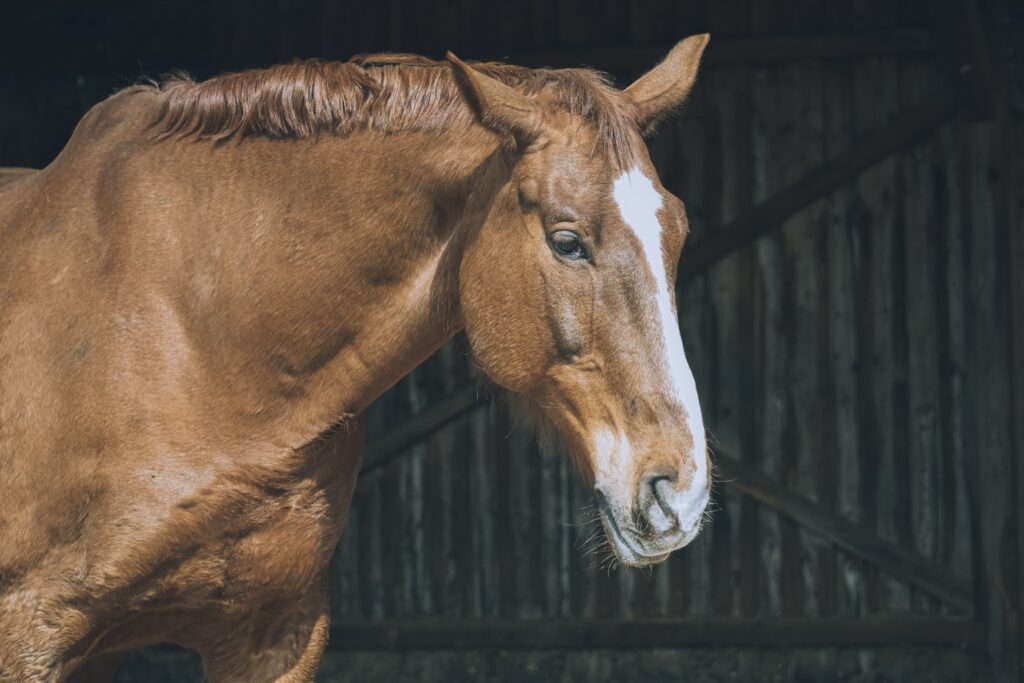
At California Care Recovery, equine therapy is a structured clinical program—not a casual recreational activity. Medically reviewed by Dr. R. Jordan Turner, DO, Board-Certified Psychiatrist and Addiction Medicine Specialist, our program is fully integrated into each client’s personalized trauma or addiction treatment plan.
All sessions are 100% ground-based. There is no riding involved, and no prior experience with horses is required.
Every 90-minute session is conducted under a strict dual-oversight model, featuring both a licensed clinical therapist and a certified equine specialist present at all times.
Sessions follow a clear, 5-step clinical pathway:
- 1. Clinical Check-In: The licensed clinician meets with you to assess your current emotional state, set specific intentions, and review treatment goals.
- 2. Safety Orientation: A comprehensive introduction to the arena environment, the horses, and ground-safety protocols to ensure you feel secure.
- 3. Guided Equine Engagement: Facilitated, ground-based exercises such as leading the horse through obstacles, grooming, or observing herd dynamics to explore relational patterns.
- 4. Therapist-Led Reflection: The clinician helps you draw connections between how the horse responded to your energy and the underlying relational or trauma patterns in your everyday life.
- 5. Integration & Documentation: Closing somatic grounding exercises to lock in nervous system regulation before session observations are integrated directly into your overall treatment plan.
If trauma has kept your nervous system stuck in a constant state of survival mode, experiential therapies can help you safely restore balance. Contact California Care Recovery today to discover how our trauma-informed equine and somatic programs in Orange County support lasting healing.
Integrating Equine Therapy into Comprehensive Care
While equine therapy provides powerful somatic breakthroughs, it works best when integrated within a complete continuum of clinical care.
At California Care Recovery in Orange County, ground-based equine sessions complement our evidence-based clinical framework, which includes:
- Trauma-Informed Psychotherapy: Cognitive Behavioral Therapy (CBT), Dialectical Behavior Therapy (DBT), and psychodynamic processing.
- Dual Diagnosis Treatment: Addressing co-occurring substance use disorders, alcohol dependence, and anxiety alongside PTSD.
- Somatic & Experiential Modalities: Physical practices, sound engagement, and bilateral movement to rebuild mind-body alignment.
- Medical Detox & Residential Care: Providing structured, 24/7 clinical stabilization in a private, peaceful environment.
By treating the biological, psychological, and relational aspects of trauma simultaneously, we give your nervous system the tools it needs to achieve long-term recovery.
Frequently Asked Questions (FAQ)
How does equine therapy calm a dysregulated nervous system faster than talk therapy alone?
Talk therapy engages the prefrontal cortex (the cognitive, rational brain), whereas trauma and nervous system dysregulation are stored in the subcortical brain and body. Equine therapy works somatically through nonverbal biofeedback, sensory grounding, and biological co-regulation with the horse. This directly lowers sympathetic arousal (fight-or-flight) and engages the parasympathetic system without requiring you to verbally recount painful memories.
Does equine therapy for PTSD require riding horses?
No. All equine therapy sessions at California Care Recovery are strictly ground-based. There is no riding involved at any point. The clinical benefits come entirely from guided, ground-level interactions, grooming, leading, and nonverbal communication facilitated by a licensed therapist and certified equine specialist.
Is equine therapy scientifically proven to treat PTSD?
Yes. Equine-assisted therapy is an established, evidence-based experiential modality. A 2024 systematic review published in BMC Psychiatry covering 13 peer-reviewed studies showed an average 22.6% reduction in PTSD severity scores following equine-assisted interventions, confirming significant improvements in emotional regulation, trauma symptoms, and overall functioning.
Do I need prior experience with horses to participate?
No prior experience with horses is necessary. Sessions are designed for individuals of all comfort levels, including those who have never interacted with a horse or who feel initial anxiety around large animals. Our certified equine specialists and clinical therapists pace every exercise to ensure absolute comfort, agency, and safety.
What conditions does California Care Recovery treat with equine therapy?
California Care Recovery utilizes equine therapy to support individuals struggling with PTSD and trauma, substance use disorders, alcohol use disorder, severe anxiety, depression, co-occurring dual diagnosis conditions, emotional dysregulation, and attachment-based challenges across our Orange County programs.
Reclaiming your peace from PTSD begins with retraining your nervous system in a safe, supportive environment. Reach out to the clinical team at California Care Recovery today at (949) 281-7823 to verify your insurance and explore our personalized trauma recovery plans.
Reclaiming your peace from PTSD begins with retraining your nervous system in a safe, supportive environment. Reach out to the clinical team at California Care Recovery today to verify your insurance and explore our personalized trauma recovery plans.